The coenzyme NAD is involved in oxidation-reduction reactions critical for glycolysis, fatty acid oxidation, the TCA cycle, and complex I of the mitochondrial respiratory chain and also is a key regulator of autophagy. At least two different mechanisms are involved. First, the NAD+-dependent deacetylase SIRT1 activates autophagy by directly deacetylating ATG proteins. Under starvation conditions, the increased NAD+/NADH ratio activates SIRT1, which results in stimulation of mitophagy. Second, the hydrogen of NADH can be transferred to NADP+ to form NADPH via the energy-linked transhydrogenase. In the fed state, when the NAD+/NADH ratio falls, NADPH inhibits autophagy by scavenging of ROS via the glutathione peroxidase-glutathione reductase system and by preventing the production of ROS at complex 1 of the respiratory chain.
DB,1:500 - 1:1000|ELISA,Recommended starting concentration is 1 µg/mL. Please optimize the concentration based on your specific assay requirements.
Application Notes:
Cross-Reactivity: Species independent. ResearchArea: Signal Transduction, Metabolism Energy, Metabolism, Pathways and Processes, Metabolic signaling pathways, Energy transfer pathways, Energy Metabolism, Metabolism Pathways and Processes, Cofactors, Vitamins / minerals Co-factors. Shipping: Ice Bag
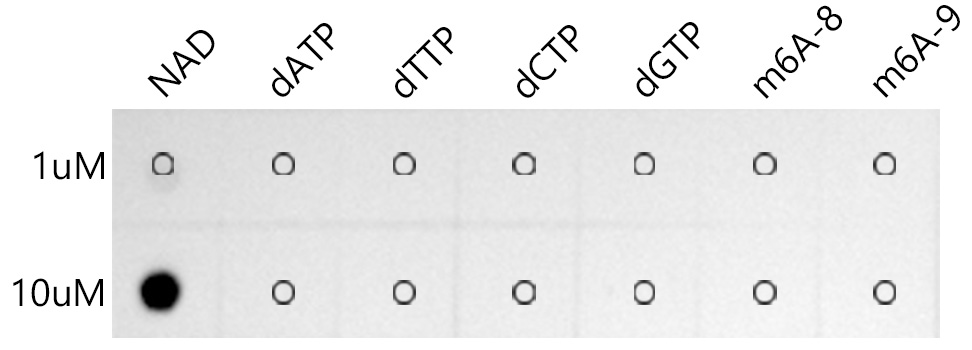
The Coenzyme NAD Rabbit mAb (A21047) are tested in Dot Blot against NAD and deoxynucleotide,adenosine. m6A 8 - ATAACTGG-m6A-CCGAATGG m6A 9 - ATAACTGGACCGAATGG
* VAT and and shipping costs not included. Errors and price changes excepted